Reliable driveway work at a good price
See Your Price Before You Call
Get an instant online estimate for your driveway project before you ever pick up the phone.
Entrance Permits Handled For You
We handle the township paperwork and culvert sizing, not just the gravel.
Graded for the Ground You Have
From flat Simcoe County clay to Muskoka Shield rock, we grade for the ground your property actually has.
WSIB Insured & Fully Licensed
Full liability insurance and WSIB coverage on every job, no exceptions.
Trusted Local Network
We work with trusted contractors across Muskoka and Simcoe County to help get your driveway project done right.
Estimates You Can Plan Around
The final on-site quote lands inside your online driveway estimate range on the large majority of projects.
Building a Driveway That Actually Lasts
A driveway that fails within a few years almost always comes down to one thing: the base wasn't built right, or the drainage wasn't thought through. We build driveways the way they should be built: proper subgrade prep, a compacted granular base sized to the ground it's sitting on, and drainage that gets water away from the surface instead of letting it pool and undermine the gravel.
Whether you're putting in a driveway where none currently exists, rebuilding one that's failing, doing a fresh gravel top-up and regrade, or dealing with a washout after spring runoff, we handle the full range of driveway work across Simcoe County and Muskoka.
What We Build
New Driveway Construction
A brand-new driveway starts with routing , deciding the path from the road to your building site based on grade, tree cover, and ground conditions. From there we clear the route if needed, cut and shape the subgrade to the correct crown and slope, place a compacted granular base, and finish with a top course of crushed gravel. On longer driveways through rural properties, we also plan for culverts, turnarounds, and any grade changes needed to keep water moving off the surface rather than down it.
Driveway Rebuilds and Upgrades
An existing driveway that's rutting, potholing, or losing its gravel every spring usually needs more than a fresh load of stone. It needs the base rebuilt. We dig out the failed material, correct the subgrade and drainage, and rebuild with a proper base and top course so the same problems don't come back next season.
Fresh Gravel and Regrading
If the base underneath is sound and the driveway just needs surface work, a regrade and fresh gravel top-up is the most cost-effective option. We reshape the crown so water sheds to the sides instead of running down the middle, and add material where it's worn thin.
Washout and Emergency Repair
Spring runoff washouts are one of the most common calls we get across our service area , a section of driveway carved out by water with nowhere else to go. We regrade the damaged section, correct the underlying drainage issue, and where needed, upgrade the culvert so the same washout doesn't repeat every spring. We prioritize washout calls because a washed-out driveway can mean no access for delivery trucks, contractors, or emergency vehicles.
Entrance Permits and Culverts
Almost every township in Simcoe County and Muskoka requires a permit before you cut a new entrance onto a public road, and most require a culvert sized to the township's specification so road-side drainage isn't blocked. Permit timelines, fees, and culvert requirements vary significantly by municipality — Severn, Oro-Medonte, Ramara, Tay, Orillia, Gravenhurst, Bracebridge, and Huntsville each have their own process. We handle entrance and culvert work as part of new driveway builds, and can walk you through what your specific township requires. See our full township-by-township entrance permit guide for fee and process details by municipality.
Ground Conditions Across Our Service Area
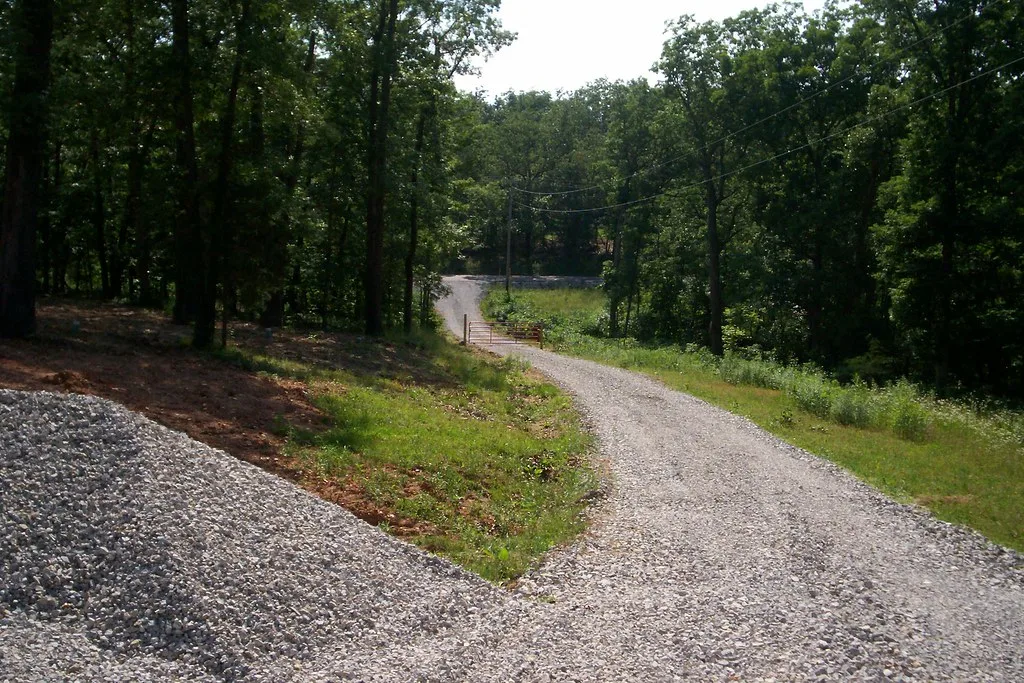
Simcoe County and Muskoka aren't one uniform terrain, and a driveway built for one part of our service area doesn't automatically work everywhere else. Around Orillia and the Ramara flats, we're often working a flat limestone plain where drainage planning matters more than grading. Water needs somewhere to go. Out toward Severn and Coldwater, the ground transitions from farm country toward the Canadian Shield edge, with granite closer to the surface on some lots. Once you're into Bracebridge, Gravenhurst, and Huntsville, Shield rock, steep grades, and thin soil over bedrock are the norm. Driveways here often need rock work and careful grade planning that a flatland-only contractor isn't set up for.
Driveway Base Construction — What's Actually Underneath
The visible top layer of gravel is the least important part of a driveway that lasts. What determines whether a driveway holds up is everything underneath it. We start by cutting to subgrade and removing any organic material, topsoil, or unsuitable soil that won't support a load-bearing base. Leaving organic material in place is one of the most common reasons a driveway settles unevenly within a year or two.
On top of the prepared subgrade, we place a granular base , typically a coarser aggregate layer first, compacted in lifts, followed by a finer top course of crushed gravel. The base layer is what distributes the weight of vehicles across the subgrade and keeps the surface from rutting. On soft or wet ground, we'll often add a geotextile fabric layer between the subgrade and the base. It keeps the granular material from working its way down into soft soil over time, which is a slow, invisible failure mode that shows up years later as a driveway that just never seems to firm up no matter how much gravel gets added.
Compaction matters as much as the material itself. Each lift of base material needs to be compacted before the next is placed. Skipping this step and simply piling material to depth leaves voids that settle unevenly under traffic. This is the difference between a driveway that's still solid after a decade and one that needs regrading every spring.
Culverts Explained
Where a driveway crosses a roadside ditch, a culvert carries that ditch's water underneath the driveway instead of letting the driveway dam it up. Getting culvert sizing and installation right matters for two reasons: an undersized or improperly installed culvert backs water up during heavy rain and spring melt, which is one of the most common causes of the washouts we get called out to fix, and townships inspect culvert installations as part of the entrance permit process, and getting it wrong means you may be asked to redo it.
We ran into exactly this on a new entrance in Severn a couple of seasons back. The existing culvert under the old farm laneway was half the diameter it should have been for that ditch's drainage area, and it had been backing up every spring for years before we ever got there. We swapped it for a properly sized pipe as part of the new entrance work, and the owner hasn't had standing water at the end of the driveway since.
Culvert size is typically specified by the township based on the ditch's drainage area, not a one-size-fits-all standard. We install culverts to the size and depth your specific township requires, bedded properly so the pipe doesn't shift or crush under the driveway's load over time.
Best Time of Year to Build or Repair a Driveway
Late spring through fall is generally the most practical window for new driveway construction in Simcoe County and Muskoka. The ground has dried out from spring melt, and there's a full season ahead before winter to let a new base settle in under normal use. Frozen ground in winter can work in our favour for clearing wooded routes, since equipment moves more easily over frozen soil than soft spring ground, but base construction and compaction are best done when the ground isn't frozen or saturated.
Washout repairs are the exception to seasonal planning. Those get scheduled as soon as possible after spring runoff damage, regardless of the ideal build calendar, because a washed-out driveway affects daily access to your property.
What Affects Driveway Cost
Five factors drive most of the cost variation we see on driveway projects across Simcoe County and Muskoka:
- Scope: A fresh gravel regrade costs far less than a new driveway cut through undeveloped ground.
- Length: More linear feet means more base material, more compaction time, and more grading.
- Route conditions: Open, clear ground is straightforward. Wooded routes need clearing first, and rocky or steep sections slow equipment down and may need rock work.
- Entrance work: A new entrance and culvert adds permit coordination, materials, and installation time versus using an existing entrance.
- Ground conditions: Dry, firm ground is the baseline. Soft, wet, or low-lying ground needs additional base material and drainage work to hold up over time.
Use the estimator below to get a realistic price range for your specific driveway project , the same five factors our project managers assess on every site visit.
Get Your Free Driveway Construction Estimate
Answer a few quick questions about your project. Takes about 30 seconds. We serve Simcoe County, Muskoka, and surrounding areas.
Driveway Construction Across Simcoe County & Muskoka
Proudly serving Simcoe County & Muskoka.
Working With Your Builder or Contractor
If your driveway is part of a larger project — a new home, cottage build, or septic installation — timing and access planning matter as much as the driveway itself. We coordinate with your general contractor or builder to make sure the driveway is either in place before their equipment needs site access, or built to handle construction traffic if it's going in early. Heavy construction vehicles can chew up a finished driveway that wasn't built to handle that load yet, so we'll often recommend a rougher base course during construction with the final top course of gravel added once heavy equipment traffic has wrapped up.
We also coordinate directly with township staff where needed for entrance permits and culvert inspections, so you're not stuck relaying information between your builder, the township, and us. One point of contact for the driveway portion of your project tends to keep things moving faster.
Driveway Maintenance and Longevity
A well-built gravel driveway with proper drainage can last many years with only periodic top-ups. The single biggest thing that shortens driveway life is standing water , whether from a low spot that never drains, a blocked culvert, or a crown that's flattened out over time and no longer sheds water to the sides. Keeping culverts clear of debris each spring and addressing small ruts before they become full washouts goes a long way toward avoiding a full rebuild down the road.
If you're planning a new build, addition, or septic installation, driveway access is often one of the first things that needs to be in place — see our gravel driveway cost guide for detailed Ontario pricing benchmarks, or our driveway maintenance guide for keeping an existing driveway in good shape between rebuilds.
Materials We Use
Base material and top-course gravel are selected based on your specific ground conditions and traffic needs. A driveway carrying regular delivery trucks needs a different base spec than a light-use residential driveway. We source aggregate locally where possible and match granular size and gradation to the subgrade we're building on, rather than using one generic mix for every job regardless of what's underneath it.
Common Driveway Problems We Get Called For
Beyond new construction, a large share of our driveway work is fixing problems that developed over time.
Potholing usually means the base underneath has failed or was never properly compacted. A driveway that's crowned in the middle but still puddles at the edges often has a drainage path that was never established when it was built. Gravel that seems to "disappear" every year, requiring a fresh load each spring, is frequently a sign that the base has failed and material is working its way down into soft subgrade below.
We diagnose which of these is happening before recommending a fix, instead of defaulting to a full rebuild for every driveway that needs attention.
Choosing a Driveway Contractor
Driveway construction looks simple from the outside — spread some gravel, done — which is exactly why so many driveways fail within a few years. When evaluating a contractor for a new build or rebuild, a few things are worth confirming before work starts:
- Do they build the base, or just add gravel? A contractor who only tops up existing material without addressing subgrade and compaction is treating the symptom, not the cause of a failing driveway.
- Do they handle entrance permits and culverts? A new entrance done without the proper permit and culvert sizing can mean redoing the work later at your expense.
- Do they carry WSIB coverage and liability insurance? Ask for a certificate before work starts.
- Do they know the ground in your specific area? A crew used to flat, sandy ground may not be equipped for Shield rock, and vice versa.
- Will they give you a price range before a site visit? Our online estimator exists because we think upfront pricing should be the norm, not the exception, in this trade.
What Our Clients Say
We had a new driveway cut in off the county road for our place outside Bracebridge — about 300 feet through some rock. They gave us a price range online before we even called, and the site visit quote landed right in that range. Culvert and entrance were handled properly with the township too.
Spring runoff washed out a section of our driveway up near Huntsville and we needed it fixed fast before we could get a delivery truck in. They got out within the week, regraded and added proper drainage so it wouldn't happen again next year.
Our old gravel driveway had ruts everywhere by spring. They regraded it properly and fixed the drainage instead of just topping up more gravel. It held up fine through a wet fall without a single soft spot.
Driveway Construction — Frequently Asked Questions
Do I need a permit for a new driveway entrance?
In most Simcoe County and Muskoka townships, yes — a new or altered entrance onto a public road requires an entrance permit, and often a culvert sized to the township's specification. Requirements vary by municipality; see our township-by-township entrance permit guide for details on your area.
What's the difference between a gravel driveway and a proper driveway build?
A gravel regrade tops up and reshapes an existing driveway's surface. A proper build starts from the subgrade , clearing the route if needed, cutting to grade, placing and compacting a granular base, and finishing with a top course crushed gravel. New driveways and full rebuilds need the base work; a simple regrade doesn't.
Can you fix a driveway that washed out this spring?
Yes , spring runoff washouts are one of the most common calls we get. Most washouts come down to inadequate drainage or a culvert that's undersized or blocked. We regrade the surface, correct the drainage, and in many cases upgrade the culvert so the same washout doesn't happen again next year.
Ready to Build or Fix Your Driveway?
Spring washout season doesn't wait, know your number before you need it.
Get Instant Estimate For Your ProjectOr call us: (647) 697-7549