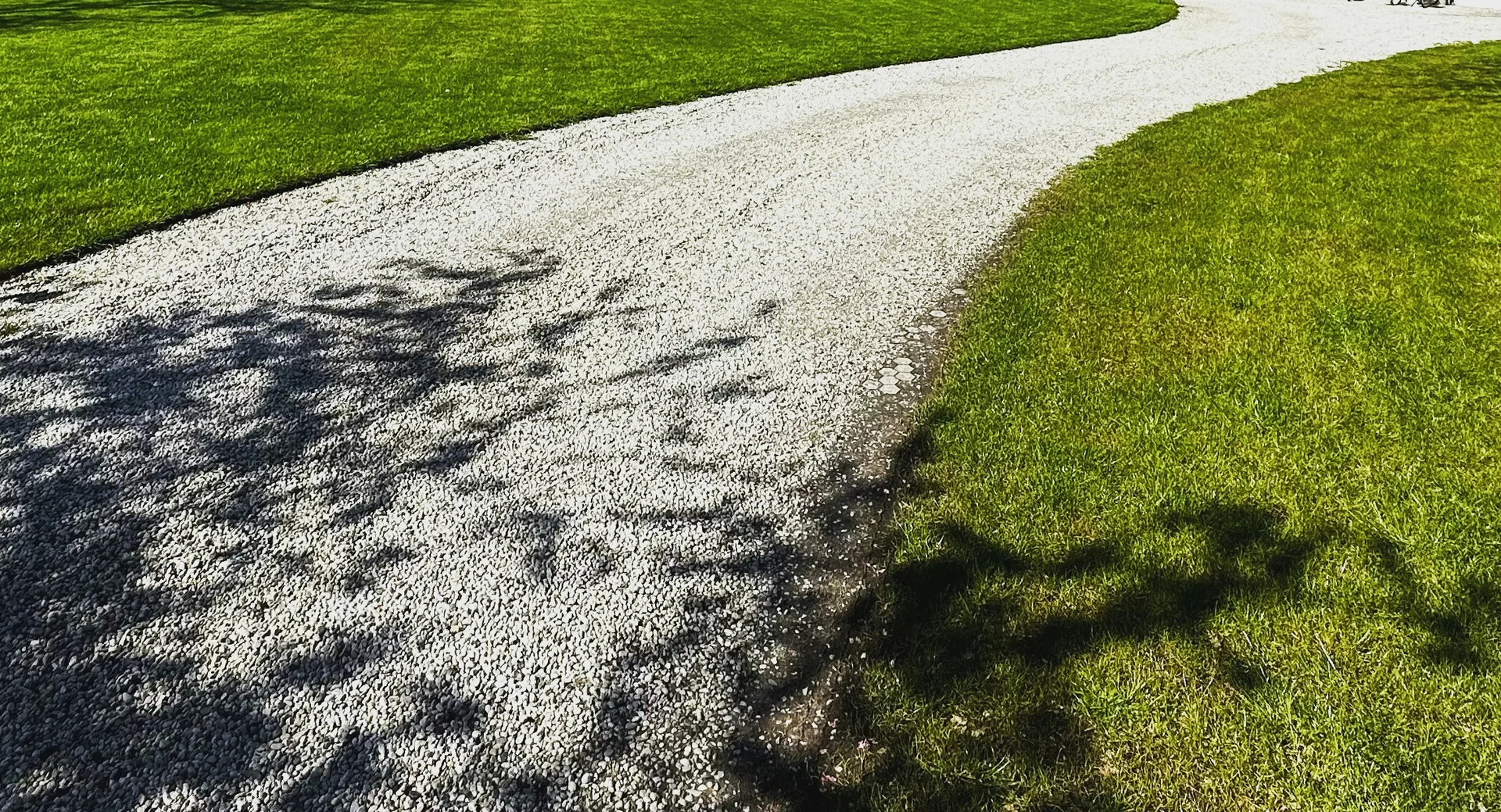
A Well-Built Driveway Still Needs Maintenance
Even a properly built gravel driveway with a solid base needs ongoing care , gravel is a surface that redistributes under traffic and weather over time, not a set-and-forget installation. The good news is that most routine maintenance is genuinely manageable yourself, and knowing what's a normal seasonal task versus a sign of a deeper problem saves you from either neglecting real issues or over-worrying about normal wear.
Spring: Assess What Winter Left Behind
Spring is when most driveway problems become visible: frost heave, plow damage, and spring runoff all show up as ruts, soft spots, or washed-out sections once the snow's gone. Walk the full length of your driveway once things have thawed and dried out, looking specifically for standing water that isn't draining within a day or two of rain, ruts or depressions that weren't there in fall, and gravel that's been pushed to the edges by winter plowing. This is also the right time for your first grading pass of the year, since freeze- thaw naturally loosens compacted surface material, making it easier to re-shape the crown properly.
Summer: Address Dust and Do a Mid-Season Check
Dry summer conditions can make gravel driveways dusty, especially with regular vehicle traffic. Calcium chloride or similar dust-suppressant products, applied by a professional service, can meaningfully reduce this if it's a persistent issue, particularly on longer driveways. Summer is also a reasonable time for a mid-season check for any low spots that showed up after a heavy spring rain but haven't been addressed yet , better to regrade a small problem area in July than let it become a bigger one by fall.
Fall: The Best Season for a Proper Top-Up
If your driveway needs fresh gravel this year, fall is generally the ideal timing , the ground has had all summer to firm up, and fresh material has a chance to settle and compact under regular traffic before winter freeze-thaw starts working on it. Fall is also the right time to clear any leaves or organic debris that's built up in ditches or culverts along your driveway, since blocked drainage going into winter is a common cause of ice buildup and spring washouts.
Winter: Manage Plowing, Don't Fight Frost
There's genuinely limited maintenance you can or should do to a gravel driveway in winter beyond managing how it's plowed. Set plow blades slightly above the gravel surface instead of scraping to the base, which preserves your top-course material through the season instead of pushing it into the ditch. Avoid heavy vehicle traffic on sections that are visibly soft or slushy during a thaw if you can help it, since driving on a saturated, partially-frozen surface can create ruts that are hard to fully correct until spring grading.
Maintenance Task vs. Real Problem: How to Tell the Difference
Most driveway issues fall into one of two categories, and telling them apart saves you from either wasted effort or a bigger repair down the line. A maintenance task is something you can fix once and expect to hold until the next normal seasonal cycle: light surface ruts from summer traffic, minor dust, gravel that's migrated to the edges after winter plowing. A real problem is something that comes back in the same spot no matter how many times you regrade or add gravel. That's a sign of an underlying base or drainage issue that surface maintenance can't fix, and it's worth having assessed rather than repeating the same top-up every few months with the same result.
If you're regularly re-graveling the same low spot, or a section of your driveway stays soft or muddy long after the rest has dried out, that's the clearest signal that what you're dealing with is a repair need, not a maintenance need. See our driveway construction pillar for what a proper rebuild or regrade involves, or if the problem showed up suddenly after a heavy rain, our washout repair guide covers that specific situation.
Simple Tools That Cover Most DIY Maintenance
For homeowners handling their own routine maintenance, a few tools cover most of what's needed: a garden rake or landscape rake for spot-filling small ruts, a rented plate compactor for properly settling fresh gravel instead of leaving it loose, and either a rear-mounted drag or a rented box blade for periodic grading passes on longer driveways. None of this requires specialized equipment , the key is doing it regularly enough that small issues don't compound into bigger ones.
Gravel Driveway Maintenance — Frequently Asked Questions
How often should I add fresh gravel to my driveway?
For most residential driveways with a properly built base, topping up the surface layer every 3 to 5 years keeps it looking and performing well. Driveways with heavier traffic, or ones where the base wasn't built to spec originally, may need top-ups more often , if you're re-graveling annually and still seeing the same problem areas, that's usually a base issue, not a surface issue.
Can I fix ruts and potholes myself?
Small, shallow ruts can often be improved with fresh gravel and a hand tamper or a rented plate compactor. Deeper ruts or potholes that keep coming back in the same spot usually indicate a drainage or base problem underneath, which surface gravel alone won't fix. You'll be re-doing the same patch every season until the underlying cause is addressed.
Should I grade my driveway myself or hire someone?
Light seasonal grading with a rented box blade or drag can be a reasonable DIY task for a straightforward, already well-built driveway. Correcting a crown that's gone flat, fixing drainage that's directing water the wrong way, or grading a driveway with real base problems is worth having done professionally, since incorrect grading can make drainage problems worse rather than better.
Does winter sand and salt damage a gravel driveway?
Not significantly on its own, but heavy plowing can gradually push gravel to the edges of the driveway over multiple winters, which is worth topping up in spring. If you hire a plow service, ask them to set the blade slightly above the gravel surface instead of scraping down to the base, which reduces how much material gets pushed off to the sides each season.
Base Problem, Not Just a Maintenance Job? Get a Real Estimate
If regrading and top-ups aren't holding, find out what a proper fix costs.
Get Your Free Driveway EstimateOr call us: (647) 697-7549